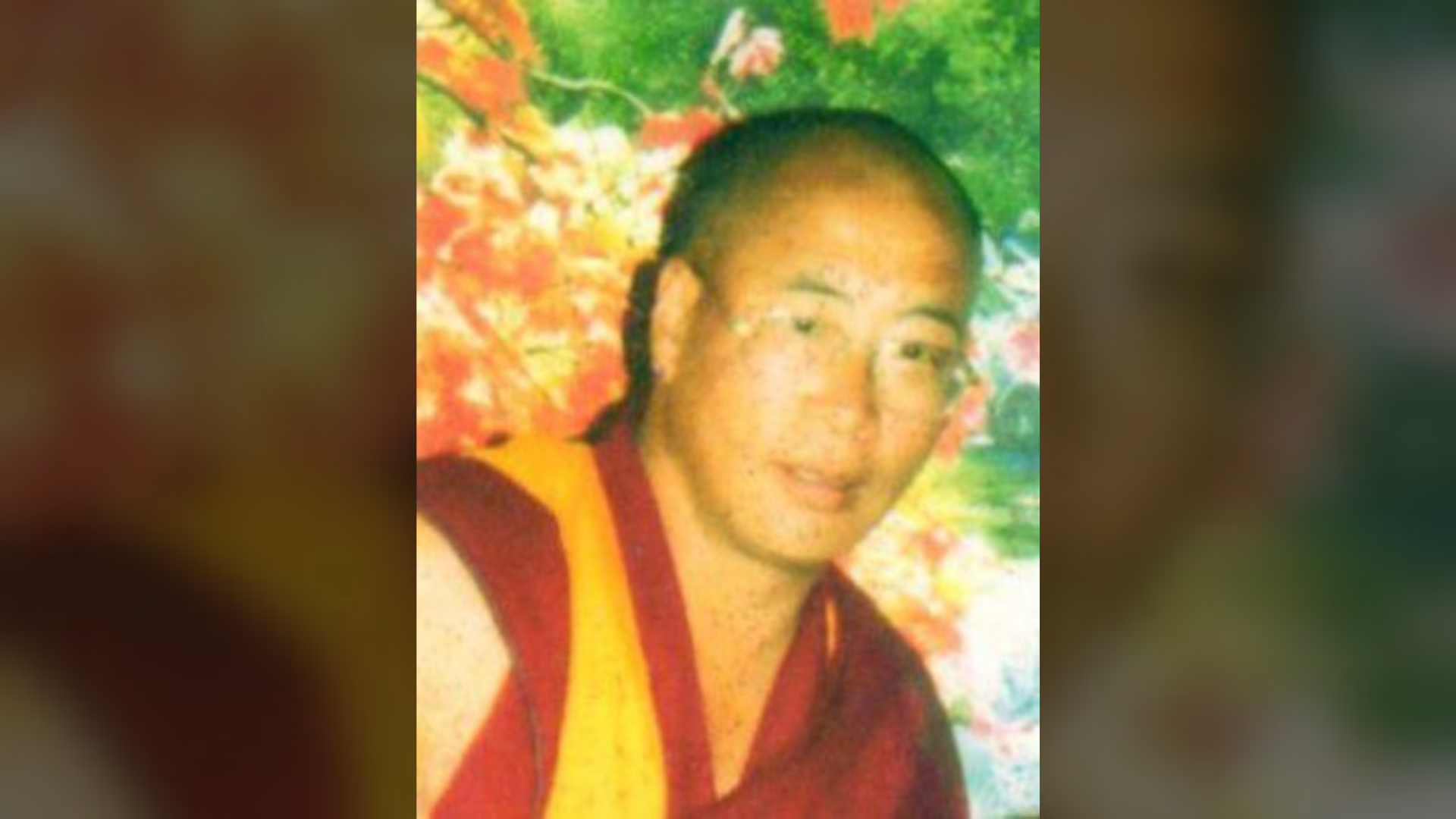
Tibet. A Tibetan Buddhist monk who disappeared for five years has been sentenced to seven years in prison, apparently for his devotion to the Dalai Lama, Tibet Watch has learned.
LHASA It is the latest case in a disturbing pattern of incommunicado detentions targeting prominent monks and educators in Tibet. In one case, a Tibetan family only learned of the detention of their relative when they were sent a bill for expenses incurred during his imprisonment.
Dargye, 63, a widely respected monk known for leading religious retreats and consecration rituals in Lhasa, was detained in August 2021. For more than five years, his family and community had no knowledge of his whereabouts or welfare — a silence that contravened China’s own laws requiring detention notifications within a specified period. It was only recently learned that he had been sentenced to seven years in prison. He has been denied all visits.
Tibet Watch has monitored a series of such cases in recent years, documenting a pattern in which prominent Buddhist monks and educators are detained incommunicado and kept beyond the reach of their families and the law.
According to new information, Dargye was charged in connection with making devotional offerings (སྐྱབས་རྟེན་དང་བསྔོ་རྟེན།) to the Dalai Lama. He is also said to have been accused of helping some Tibetan monks leave Tibet.
Dargye (དར་རྒྱས།), from Golok Palshul Serta (མགོ་ལོག་དབལ་ཤུལ་གསེར་རྟ།) , is from Serta Sera Monastery (གསེར་རྟ་སེ་ར་དགོན་པ།) in Serta County, present-day Sichuan, in the eastern Tibetan area of Amdo. He had been living in Lhasa, making pilgrimages, conducting religious retreats, and receiving teachings from lamas. Dargye performed consecration rituals for religious statues, scriptures, and stupas, and operated a small shop in Lhasa providing such services to Buddhist devotees.
Dargye was detained together with his relative Tsering and a nun named Choekyi on 5 August 2021. While Tsering and Choekyi were later released from police custody, Dargye did not return home. His family contacted Lhasa police officials, who assured them that he was well and that they had no need to worry. But they heard nothing else. Tibet Watch only learned of his disappearance in 2025.
These actions violate China’s own laws. The Criminal Procedure Law states that “a public security organ must produce a warrant of arrest when arresting a person” and that the organ “shall, within 24 hours after arresting a person, notify his family or the unit to which he belongs of the reasons for the arrest and the place of custody, unless such notification would hinder the investigation or there is no way of making such notification.” (Article 71).
Dargye’s case – encompassing arbitrary arrest, secret detention, failure to notify his family, and secret charging and sentencing – is not an isolated one. It reflects the broader reality faced by many Tibetans, who are arrested, detained, sentenced, and imprisoned in complete secrecy and without due process. As with Dargye, whose situation only came to light after more than five years, information on many such cases never surfaces at all, owing to China’s pervasive surveillance, severe restrictions on communication, and the secrecy with which such repression is carried out inside Tibet.