Middel East. Nearly 2 Million in Gaza Need Urgent Shelter Assistance as Winter Looms: IOM Chief Warns
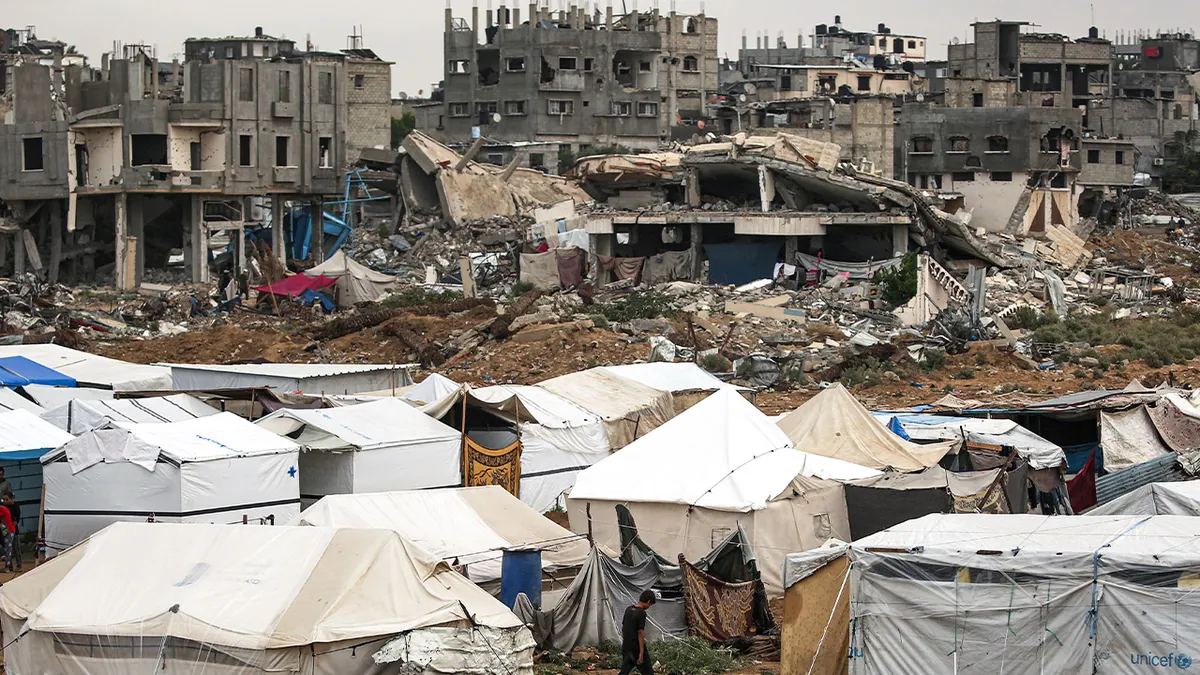
| Geneva, 9 October 2026 – Nearly all of Gaza’s population, almost two million people, still require shelter assistance one year after a ceasefire was announced. As winter rain begins, the combined supply pipeline of humanitarian shelter partners covers barely 17 per cent of identified winter needs, the International Organization for Migration (IOM) Director General Amy Pope warned today. After years of displacement and widespread destruction, Palestinians are facing a fourth winter without adequate protection from rain, flooding and cold. Insufficient funding and continuing Israeli authorities’ constraints on the entry of critical shelter supplies are preventing humanitarian organizations from responding at the scale required. « Families who have already endured repeated displacement and devastating loss must be able to face the winter in safety and dignity, » Pope said. « Shelter materials must enter quickly, predictably and at the scale required. » More than half of all tents and makeshift shelters currently in use are in poor condition that requires replacement. Tents are designed as a temporary emergency measure and generally last only six to 12 months. With few alternatives available, many families are living in war-damaged buildings that pose serious risks to life. Just last month, dozens were killed in Gaza city when a war-damaged building collapsed. More than 3,600 structures were identified by an IOM partner in August as dangerous and at risk of collapse. The strengthening El Niño phenomenon is expected to bring heavier rainfall, which could further weaken unsafe buildings, while heavily damaged drainage systems leave communities exposed to flooding. IOM and partners working in site management have identified nearly 1.8 million people living in displacement sites, most of them in areas at risk of flooding. Floodwaters could damage shelters, destroy families’ remaining possessions and force people to move once again. Approximately 8,600 IOM emergency shelter kits are pre-positioned outside Gaza and ready for delivery but continue to be turned away at crossing points by the Israeli authorities. Meanwhile, humanitarian teams are using locally available and salvaged materials wherever possible. These efforts provide limited temporary support but are insufficient to meet widespread shelter needs. “The solutions are known, the supplies are ready and humanitarian teams are prepared to deliver,” Pope said. “Immediate and sustained humanitarian access is essential to protect lives, strengthen damaged shelters, and help families move beyond temporary solutions. All parties must facilitate principled humanitarian action and support a response equal to the severity of the crisis.” IOM calls for the immediate and sustained entry of tents, emergency shelter kits, relief housing units, wood, tools and other materials needed to reinforce shelters, repair damaged homes and support families seeking safer accommodation. Predictable access to specialized equipment, fuel, spare parts and construction materials will also be essential for debris removal and movement toward early recovery. |
| Notes to Editors 1.98 million people in Gaza need shelter and non-food item assistance (Palestine Shelter Cluster). Almost 300,000 families (1.65 million people) are estimated to require winter-specific shelter assistance in Gaza. Current stocks and pipeline supplies can provide only partial assistance to around 52,000 families, covering roughly 17 per cent of needs (Palestine Shelter Cluster). 54 per cent of tents and makeshift shelters are in poor or very poor condition (Palestine Shelter Cluster). An assessment conducted by the Arab and International Organization to Construct in Palestine (AIOCP), an IOM partner, assessed approximately 21,000 buildings in August, and identified 2,638 buildings which require demolition or removal and 980 buildings which require evacuation due to identified safety risks (AIOCP). 1.77 million people are living in 1,783 displacement sites, as of 5 October (Site Management Cluster). 56 per cent of displacement sites are in areas at medium- to high-flood risk (IOM, Site Management Cluster and Shelter Cluster). IOM co-coordinates the Palestine Shelter Cluster, led by the Norwegian Refugee Council (NRC), and provides technical support to the Site Management Cluster. |