United Nations. HCR winter appeal: 9m people urgently need winter aid as resources dwindle and temperatures drop
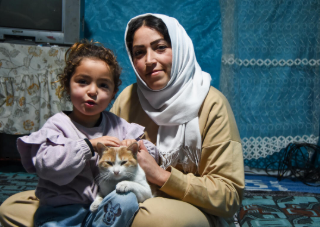
GENEVA – Facing funding shortfalls and surging energy prices, at least 9 million people are estimated to require additional assistance to get through this winter across four war-affected countries – Ukraine, Syria, Lebanon and Afghanistan – UNHCR, the UN Refugee Agency, said today as it launched its annual winter fundraising appeal.
To help offset deep declines in its budget, UNHCR is aiming to raise at least $50 million for winter support in 2026-27, $3 million more than it raised last year, through its annual campaign aimed at individuals and the private sector.
“Resources are scarce and costs are spiralling just as winter looms in the Northern Hemisphere,” said Dominique Hyde, Director of External Relations at UNHCR. “Millions in these fragile, war-affected countries risk facing the elements without enough protection from the cold. They need the public’s support as never before. And we need to shield them immediately.”
Winter needs are vast across all four operations, with millions contending with a recent surge in energy and food prices, makeshift shelters, a lack of fuel for heating and cooking and insufficient clothing and blankets, further stretching household budgets. Even before winter, displaced people and their hosts had been hit by cuts to cash assistance, health care, education and livelihoods. Any money raised will buy, among other things, heaters in Afghanistan, thermal blankets in Syria and Lebanon, and kits to repair bombed houses in energy-starved Ukraine.
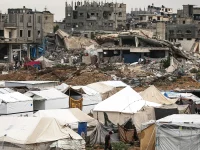
This will be the fifth winter of full-scale war in Ukraine. Temperatures risk plunging to -20°C amid accelerating Russian Federation strikes on civilians and humanitarians, with power outages heaping fresh misery on the war-ravaged population, including around 4 million displaced internally. Last winter, energy facilities were hit at least 423 times. UNHCR’s winter plan includes cash for around 310,000 people and better-insulated homes for 80,000. UNHCR monitoring found 75 per cent of people leaving Ukraine in December 2025 to February 2026 cited a lack of electricity, water or heating, underscoring how winter conditions can drive displacement.
In Dnipro, Svitlana told UNHCR about her fears after a drone blasted her apartment last winter. Seconds before the strike, she had grabbed her son Yosyp and entered the basement. “After, I saw a lot of glass scattered everywhere. If my child had been in the room at that time, the chances of him surviving would have been very low … [Outside], I saw Lego building blocks that Yosyp had been playing with. He played with them on the windowsill. And I saw the rails from the train set at the entrance to the building. Then I realized that we didn’t have windows.”
Afghanistan faces another difficult winter amid large-scale returns, massive humanitarian needs and severe funding constraints. Close to 4 million returned from Pakistan and Iran between January 2025 and July 2026, many with limited resources to rebuild. UN data indicates that 4.2 million people will need shelter support in 2026, while nearly a third of assessed households reported insufficient winter clothing. Funding gaps have limited the support available, including cash assistance for returnees, shelter repair kits, blankets and heaters.
“Families are making difficult choices between heating, food and health care. Last winter, many burned cardboard, paper or plastic waste to stay warm because coal and firewood were unaffordable,” Hyde said. “Children are especially vulnerable, and we fear more of what we saw last winter, with cases of pneumonia and respiratory illnesses.”
Syria has offered reasons for optimism as millions have returned from the region in the two years since the fall of the Assad regime. But without more funding this winter for the basics – a roof, clothes, heating oil – the fate of the returnees may become increasingly precarious. In Syria, 2.4 million people will need winter assistance in priority areas. UNHCR hopes to assist around 230,000 people, less than half of last winter.
In Lebanon, almost 300,000 people are expected to need winter assistance. However, due to funding constraints, UNHCR is able to reach only half of those in need. Surging heating costs are worsening vulnerabilities: diesel prices have nearly doubled since before the March 2026 regional escalation, with families reporting that assistance which once covered much of the winter may now last only a few weeks
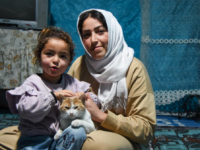
Khadija is originally from Golan Heights in Syria but was forced to flee after bombings intensified. She was only 19 when the war began, and didn’t want to leave Syria, but eventually her father insisted that the family move to Lebanon. Khadija fled Syria in 2014 with her mother, father, sisters and brother. Even at the border, she remembers not wanting to enter Lebanon and feeling as though she had been exiled.
In Lebanon, she later met her husband, married and had children. However, her husband is ill, meaning that it is down to her to provide for her family, so she takes whatever work she can find, including work for a Lebanese family and seasonal agricultural jobs. The family has lived in the same tent for around five years. Made from wood, tarps and plastic sheets, it is difficult in every season: too hot in summer, too cold and wet in winter. When it rains, water can enter from above, underneath and the sides, soaking bedding and creating puddles inside.
Khadija often wakes at night to check whether the ground, carpets or bedding are wet. She also worries about exposed electrical wires, stove risks, fire and the tent collapsing or flooding. Winter is especially hard. When there is no diesel, Khadija uses blankets to try to keep the children warm. She says it is indescribable when she cannot provide heating, which she sees as one of the simplest rights. Wet clothes take days to dry, mud makes daily movement difficult, and the cold adds pressure to an already fragile situation. She relies on UNHCR cash assistance to be able to pay for rent, electricity, heating, food, clothes and medical supplies. In winter, this support is even more essential in order to keep her children warm and fed.