Art. A history of nudes, from sculptures to Snapchat
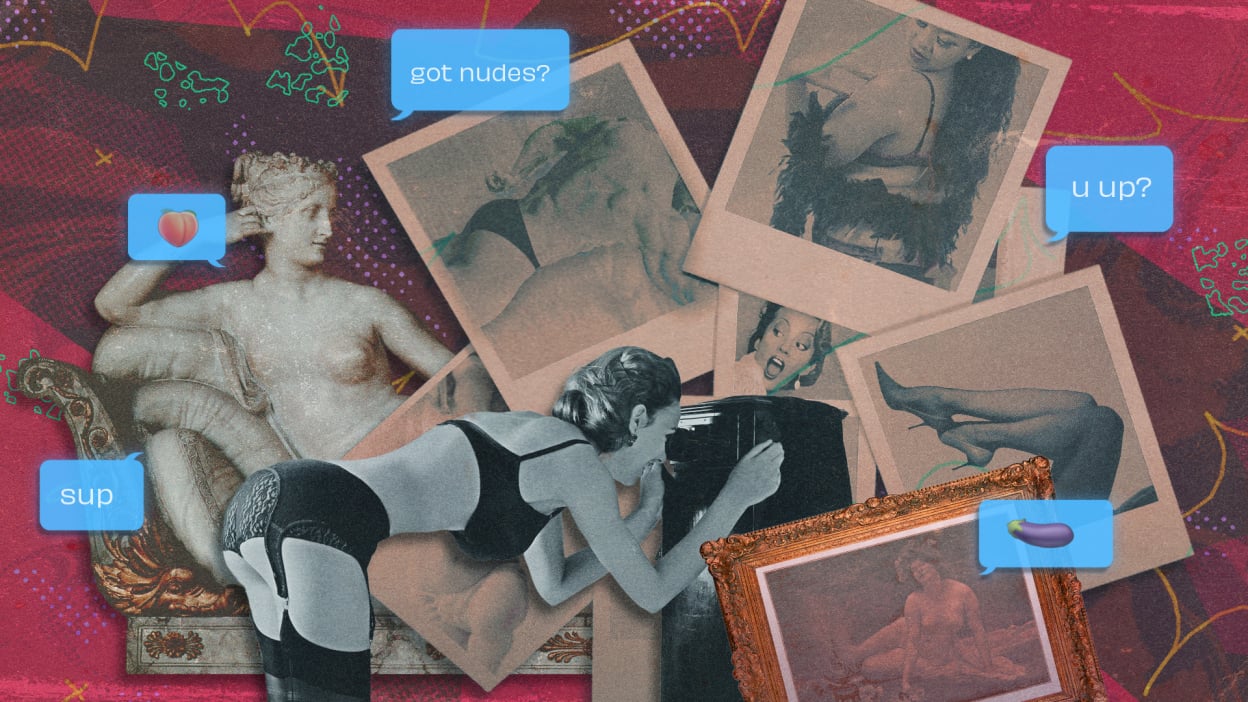
CUL NU Nudes are an ancient art form.
The history of nudes, from the earliest prehistoric artistic representations to the era of digital sexting, showing that humanity’s fascination with the naked body has remained constant across centuries. Works such as the Venus of Willendorf, Greek sculptures, and Renaissance nudes reflect a long artistic tradition that is often idealized and shaped by gendered norms: the male nude has historically been celebrated, while the female body has more frequently been associated with shame or mythology.
Before the modern era, exchanging nudes was rare and complex, limited by widespread illiteracy, the high cost of painting, and strict social norms. Erotic letters did exist, though many were censored or destroyed. A major turning point occurred in the 19th century with artist Sarah Goodridge, who created an intimate self-portrait intended for a lover. This radical act anticipated the practice of sending personal nudes and asserted female control over bodily representation.
The invention of photography accelerated this evolution. Nude photography developed throughout the 19th and 20th centuries, first as an artistic study and later as a more personal, documentary, or provocative form of expression. However, this period was also marked by non-consensual practices, particularly in colonial contexts.
With the rise of smartphones and social media, sending nudes became widespread, instantaneous, and democratized. This shift profoundly altered codes of intimacy and seduction, partially replacing traditional forms such as love letters.
Finally, the text questions the blurred boundary between art and pornography. Contemporary examples show that the context in which a nude image is displayed—whether in a museum, online, or on a pornographic platform—can radically change how it is perceived. Current debates, intensified by digital censorship and laws such as FOSTA/SESTA, highlight that distinctions between art, eroticism, and pornography remain subjective, culturally defined, and deeply political.
Technological advances have greatly expanded access to nude imagery and its sharing, without resolving fundamental issues of gaze, power, consent, and artistic value.